
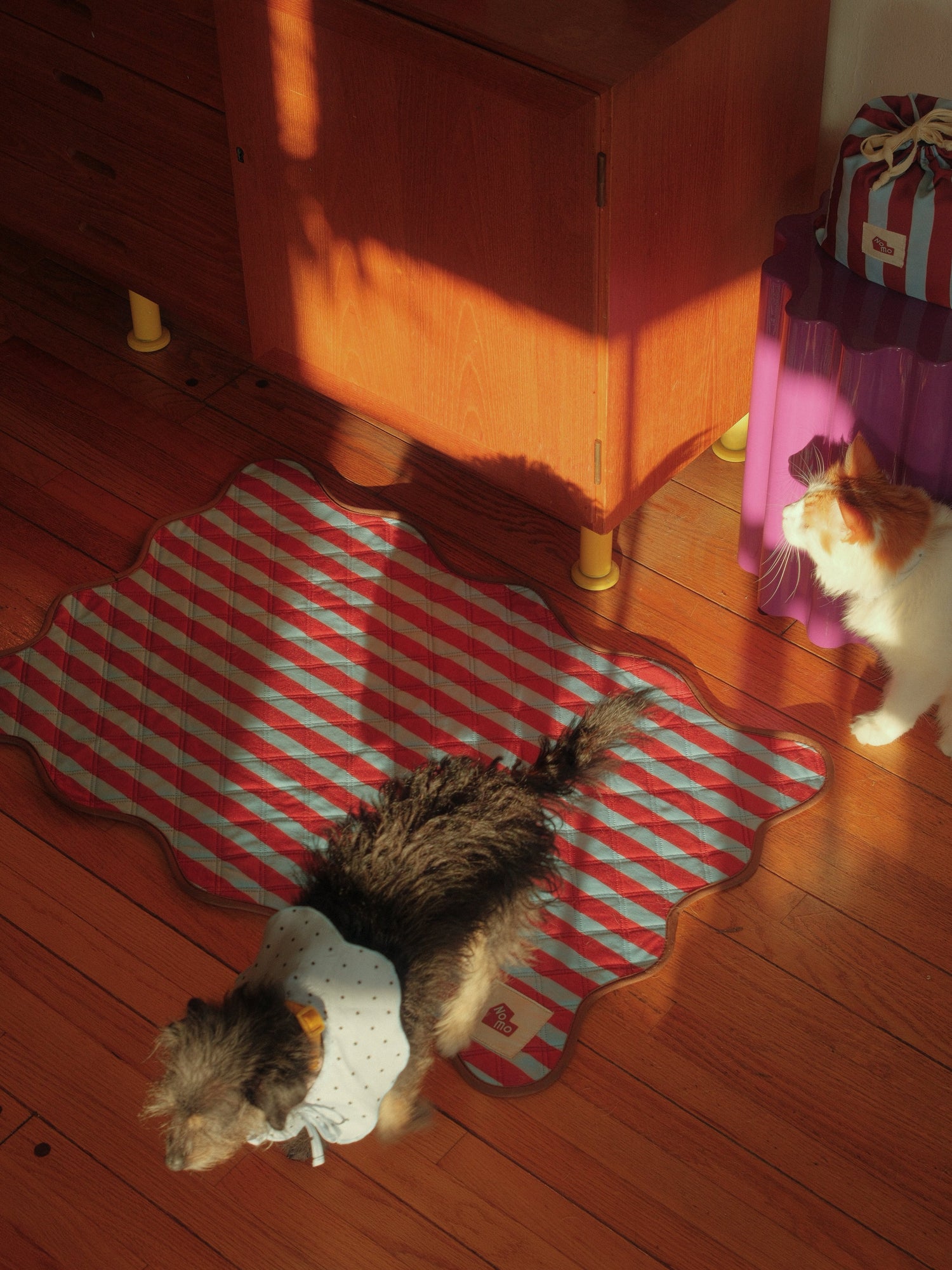
If you’ve landed here, you’re probably doing what we did before we built our own: staring at a pile of soggy disposable pads and wondering if there’s a better way.
Short answer: yes, reusable dog pee pads are worth it — but not for every dog, and not every reusable pad is worth buying. Here’s the honest breakdown.
“We bought this for our 3 month old mini dachshund because we didn’t like the look of those ugly blue pads. She was already somewhat trained to pee on those blue pee pads so we started by leaving one on top of the Ellie Pad so she could transition easier. It only took her a few days to start peeing on the Ellie pad by itself. We love the way it looks and she has transitioned nicely. I highly recommend this for new dog owners that want a better alternative to those ugly blue pads. Also, buy at least 2 so that way when you throw the Ellie pad in the wash, your dog will have a clean one to go on in the meantime!”
The Real Cost of Disposables
Let’s start with the number that usually settles the debate.
A box of 100 disposable pee pads runs about $25–35. Sounds reasonable until you do the math. A dog using two pads a day burns through roughly 730 pads a year — about $180–255 annually, just on pads. For a senior dog or one in training who goes through three or four a day, you’re looking at $360–500 a year, every year, for the life of your dog.
Over five years with a heavier-use dog, that’s easily $1,500–2,500 spent on something you throw in the trash.
A set of quality reusable pads typically runs $35–120 depending on how many you buy. Even accounting for washing, you’ll break even in the first few months — and come out significantly ahead every year after.

The Environmental Math
This one is harder to ignore once you see it laid out.
The average disposable pee pad takes 500+ years to decompose in a landfill. They’re made from a mix of plastic, SAP (superabsorbent polymer), and wood pulp — none of which breaks down quickly. A dog using two pads a day generates over 700 pads a year, all of it going to landfill.
Over the lifetime of a ten-year-old dog, that’s 7,000+ pads. Per dog.
Reusable pads aren’t zero-impact — washing uses water — but the lifecycle comparison isn’t close. If environmental footprint is part of how you make purchasing decisions, this is an easy call.
What Actually Makes a Reusable Pad Work
Not all washable pads are equal, and this is where a lot of people get burned on their first purchase. Here’s what to look for:
A true leak-proof bottom layer. The waterproof backing is the most important component. It needs to be heat-bonded or laminated, not just a thin coating that degrades after a few washes. Test this: pour a small amount of water on a pad sitting on a hardwood floor. If it bleeds through within 30 seconds, the backing isn’t doing its job.
Enough absorbent layers to actually hold volume. A thin pad designed to look good in a product photo will leave you mopping the floor. Look for multi-layer construction with a quilted or fleece top that wicks moisture away from the surface so your dog isn’t standing in it.
Machine washability that holds up. The pad should be able to go through a regular wash cycle (cold or warm, not hot) and come out maintaining its shape and performance. Some pads start leaking after 10–15 washes — that’s not reusable, that’s just a more expensive version of disposable.
A size that actually fits your space. Disposable pads are mostly one-size, which means they’re often too small. A dog who misses the edge half the time is still a problem you’re cleaning up after. Reusable pads tend to come in larger sizes.

The Ellie Pad: 36" × 24", leak-proof TPU base, multi-layer absorbent core
Still not sure how it performs in real life? Watch it in action:
The Honest Downsides
We’re not going to tell you washable pads are perfect. They’re not.
There’s a washing routine. You need enough pads to rotate through while others are being washed. For most dogs, that means owning at least 3–4. If you’re dealing with a dog who goes frequently, you’ll want more.
The upfront cost is higher. You’re paying $35+ instead of $25 for a box of 100. The math pays off quickly, but it requires buying in a bit upfront.
They don’t work well with every dog. Some dogs — especially those in active training — go through so many pads in a day that the washing logistics get overwhelming. And some dogs will just shred any soft material in front of them, reusable or not.
You need to wash them promptly. Leaving a soiled pad sitting too long before washing leads to odor that’s harder to remove. If your laundry routine is irregular, this matters.

Machine washable and dryer safe. The washing routine is easier than you think.
Who Reusable Pads Are Best For
They’re genuinely worth it if your dog fits any of these:
- Senior or incontinent dogs who use pads regularly long-term. The savings add up fast, and you’re not constantly reordering.
- Apartment dogs who aren’t going outside for every bathroom break. You want something that works reliably and doesn’t look terrible in your space.
- Smaller dogs in potty training where you want a designated spot that stays put and doesn’t get crinkled or moved around.
- Dogs recovering from surgery who need extended crate rest or limited mobility.
- Anyone bothered by the waste of throwing out pads constantly.
They’re probably not the right fit for dogs in intensive early training who are going through many pads a day, or households where laundry access is limited.

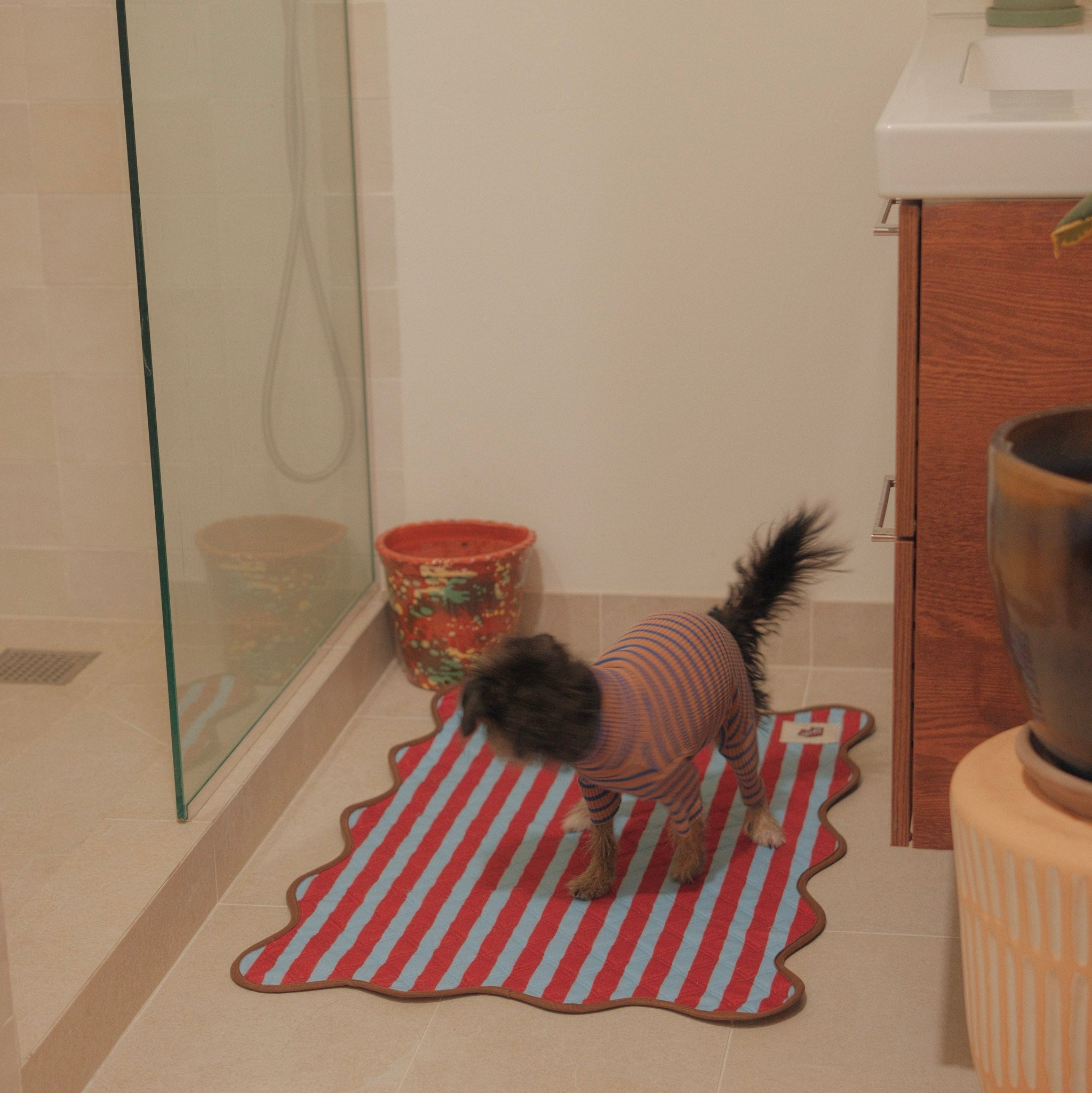
Works in any corner of your home — no more hiding the pee pad.
“With a senior pet with health complications, these are truly a life saver! I’ve been struggling with disposable puppy pads for years so I was excited to find these. They are very high quality, I’ve not had a single leak since we started using them, and cute too!”
What to Look for When You Buy
If you decide to make the switch, a few practical notes:
Buy at least 3–4 pads so you always have dry ones available while others are in the wash. Start with one size larger than you think you need — dogs’ aim isn’t always precise. Wash in cold water with unscented detergent, and skip fabric softener (it coats the fibers and reduces absorbency over time). Line dry when you can to preserve the backing longer.
For dogs who are skeptical of new surfaces, place the reusable pad on top of a disposable for a few days until they’re comfortable with the texture.
The Bottom Line
If your dog uses pee pads with any regularity, switching to reusable pads will almost certainly save you money — usually within the first few months. The environmental case is strong, the washing routine is manageable once you have enough to rotate, and a well-made pad performs better than disposables in every measurable way.
The caveat is quality. A cheap reusable pad that falls apart after fifteen washes isn’t actually reusable — it’s just more expensive garbage. Buy from a brand that’s clear about materials and construction, and start with a single pad before committing to a full set.

If you’re looking for a place to start, The Ellie Pad is what we built when we couldn’t find anything we’d actually want in our own homes. Leak-proof, machine washable, and designed to disappear into a well-decorated space rather than stick out of it.
Have questions about making the switch? Email us at hello@nomohaus.com — we’re happy to help figure out whether it’s the right fit for your dog.

Leave a comment
This site is protected by hCaptcha and the hCaptcha Privacy Policy and Terms of Service apply.