
In this article
Most dog owners reach the same point eventually. The dog is settled. The routines are in place. But the room has slowly filled with things that work in a functional sense while feeling like they do not quite belong.
A blanket on the floor that keeps getting kicked. A step stool that ended up in front of the sofa and never moved. A cushion on the floor that is not really a bed but sort of became one.
It is not a dramatic problem. But it accumulates. And over time, a home that works for your dog starts feeling like it is less yours.
The fix is usually simpler than it looks — but it requires looking at the room the way your dog actually moves through it.

Where to look first
Start With What Keeps Repeating
Before adding anything to a room, watch what your dog does every day. Where do they pause before jumping? What do they circle before lying down? What workaround have you built — even a small one — that keeps showing up in the same spot?
That pattern is telling you something. It is usually pointing to one specific gap: a height that is hard to manage, a surface that is not quite right, or a spot that works for your dog but nothing there works well for the room.
The questions worth asking first
- What does your dog try to reach most often?
- Where do they hesitate or slow down?
- What temporary fix keeps reappearing in the same spot?
That is where to start — not with the empty corner, but with the repeated moment.
The accumulation problem
Why Half-Fixes Make Rooms Feel Worse
The instinct when something is not working is to add something small — a temporary fix that handles the immediate problem without committing to anything. A spare blanket becomes a landing pad. A stool gets repositioned as a step. A pillow stays on the floor because it sort of helps.
None of these decisions feel significant. But layered together, they change how a room reads. Instead of a home with a dog, it starts to feel like a dog's home with some furniture in it.
Where to put it
The Movement Path Matters More Than the Empty Corner
Most people think about placement by looking for available space. A corner that is not being used. A wall with some room. An area that could hold one more thing.
The problem is that approach ignores where your dog actually goes. A step placed in an empty corner does nothing if your dog's path runs along the opposite wall. A bed positioned for visual balance creates a second problem if your dog always gravitates toward the foot of the sofa.
How to find the right placement
Look at the path first. Where does your dog come from when they try to get onto the sofa or the bed? Where do they slow down or hesitate?
That is where the support belongs. Once placement follows movement rather than available space, the product tends to look better too — because it is where it needs to be, not just where it fit.
For dogs who need a boost
When Your Dog Needs a Little Help Getting Up
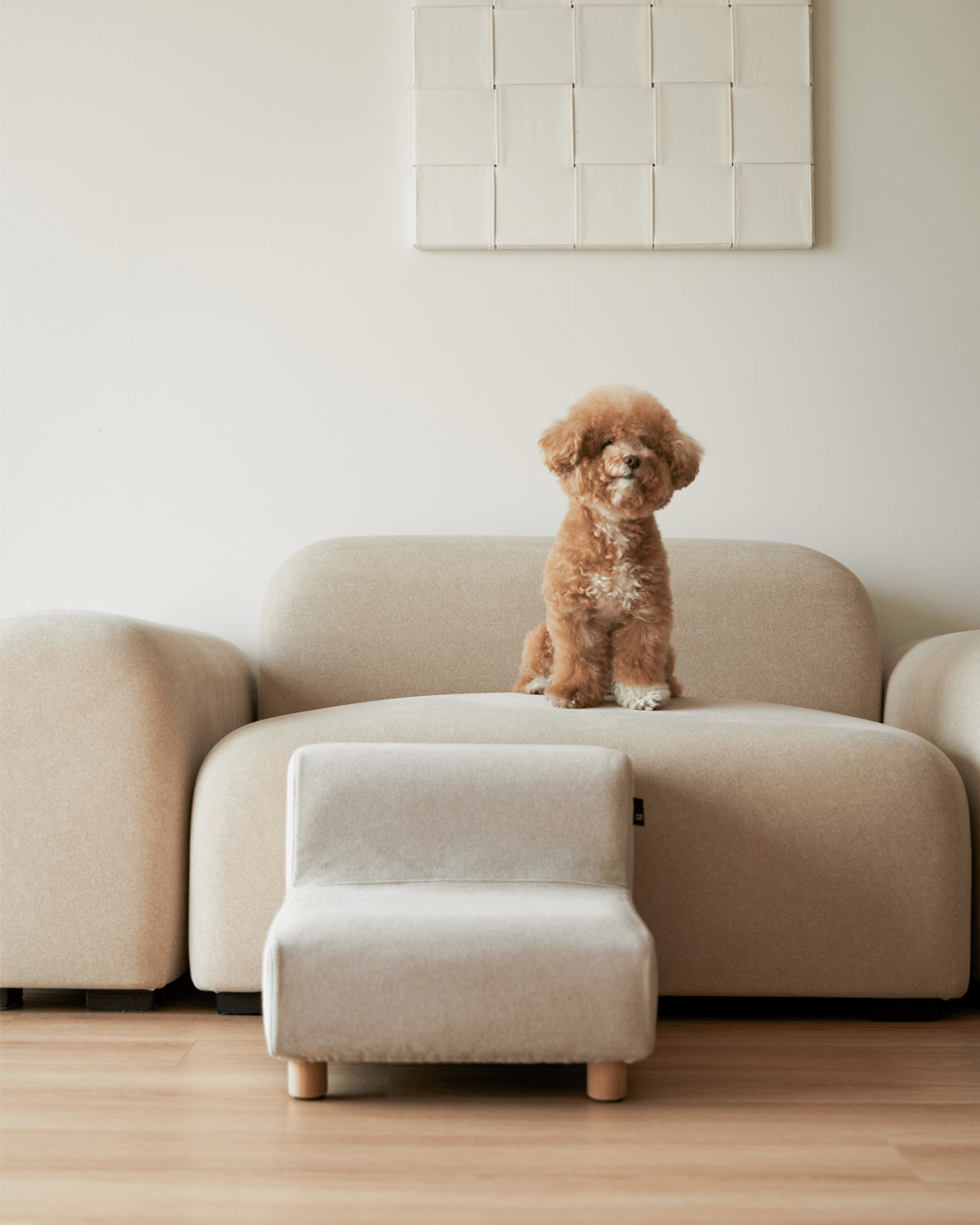
For dogs who go up and down from the sofa or bed throughout the day — especially smaller breeds or older dogs with joint sensitivity — a low-profile pet step solves the problem cleanly.
Why proportion matters
A step that is too tall or too wide draws more attention than the problem it is fixing. A cleaner, lower-profile option blends into the furniture arrangement and fades visually, while still doing its job every time.
The goal is not to hide the step. It is to choose one that earns its place — useful, quiet, and easy to keep out.
A retreat that belongs
The House That Earns Its Spot
A pet house placed intentionally — in the right spot, with the right proportions — looks different from one that ended up somewhere because there was space.
The difference is not always about the product itself. It is about whether it is solving a specific problem or just occupying a position.
When a house is placed because your pet genuinely retreats there, it tends to sit in the room more naturally. It belongs to a moment in your pet's day, which gives it a reason to be there.

Restraint over volume
Fewer Pieces, Better Placed
The rooms that feel most settled — for both the people and the dogs in them — tend to have fewer pet products, not more.
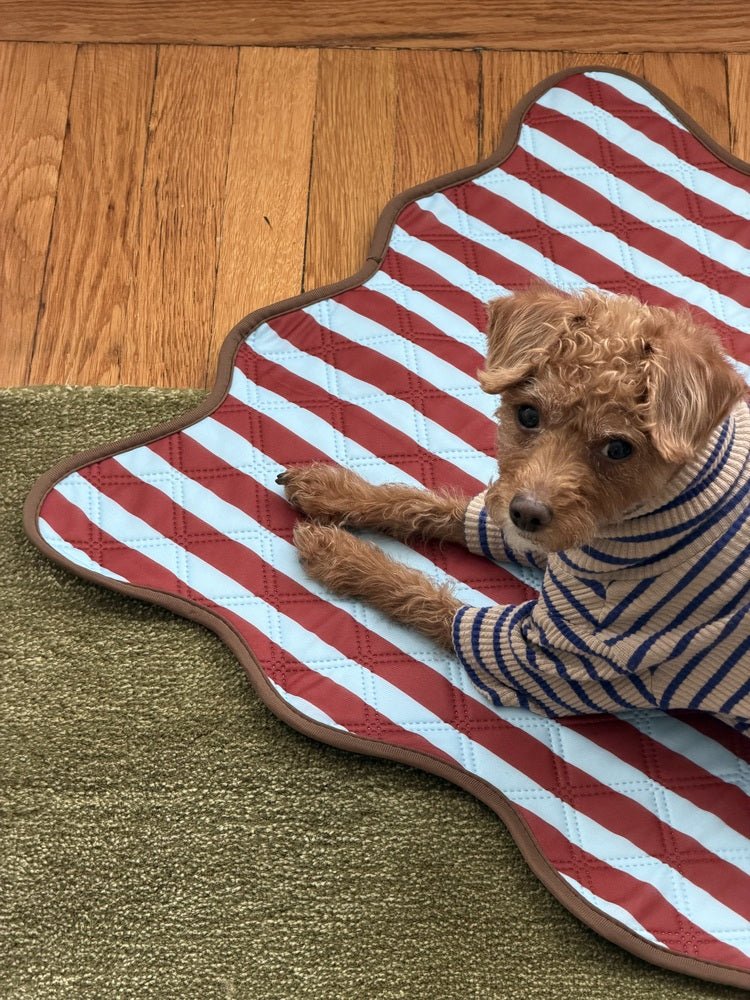
One step where it is needed. One bed in the right corner. One pad that does not ask to be hidden.
Each piece solves something real. Nothing is there just to fill a gap or buy time until something better comes along. That restraint is usually what makes the difference. Not more solutions — more considered ones.
The pieces that stay visible
Keeping the Practical Parts Looking Good
Not every pet product needs to be hidden — but the ones that stay visible all day are worth choosing carefully. The practical pieces that live on your floor or sit in a corner are the ones with the most impact on how a room feels day to day.
If you are looking at the pad situation specifically, our friends at Nomohaus have a useful guide on how to keep reusable dog pee pads clean and lasting longer — worth a read if you are switching away from disposables.
The bottom line
A dog-friendly living room is not a less stylish living room — it is a more considered one.
The pet products that hold up in a real home are the ones that solve a specific problem, sit where movement actually happens, and stop asking to be noticed.
Fewer pieces, placed for how your dog actually moves, finished in materials that belong next to your other furniture. That is usually all it takes.
Written by
Design for Pets — pet steps, bed cushions, and houses designed to fit the way people actually live. Browse the full collection at designforpets.co.

Leave a comment
This site is protected by hCaptcha and the hCaptcha Privacy Policy and Terms of Service apply.